The Butterfly Effect of a Single Card in Solitaire
If there’s one game that goes with the butterfly effect theory, it has to be solitaire. Let’s discuss that effect of a single card in solitaire.
If you've played enough solitaire free online, you've probably experienced this strangely specific emotion. Everything is going perfectly.
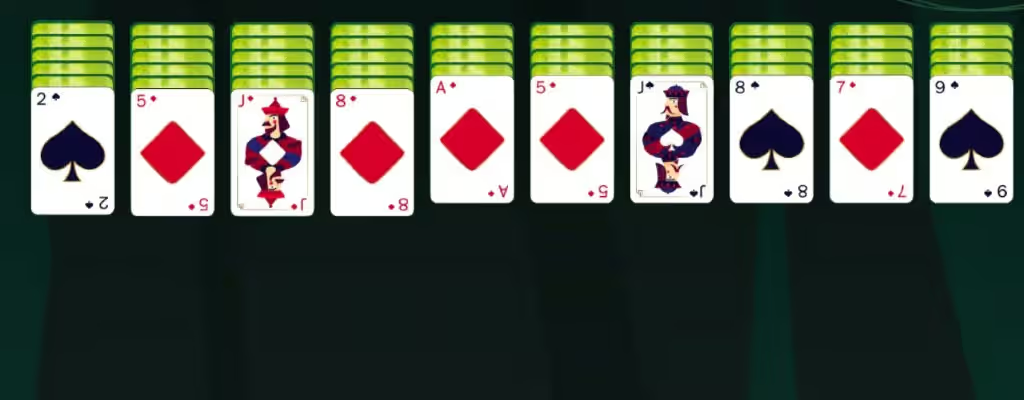
The red six has somewhere to go. The black five follows. Three new cards flip over, and for a brief, glorious moment, we start wondering if this might finally be one of those games where everything just...works.
Then we move one innocent-looking card. Five minutes later, the entire board has somehow fallen apart.
It's amazing how one tiny decision can quietly ripple through the rest of the game. That's part of what makes Solitaire so much more interesting than people give it credit for. On the surface, it looks calm and straightforward. Underneath, it's basically a chain reaction waiting to happen.
Every move closes another door
One thing Solitaire never tells us is that every move has an invisible cost. Moving a card doesn't just open one opportunity. It often removes another.
That black queen we've just placed onto a red king? Great move. Usually.
Unless it was secretly blocking access to the one column we needed to empty later. Suddenly the board feels tighter. Options disappear. We start wondering why every decision seemed brilliant about two minutes before becoming deeply questionable.
The funny part is that nothing dramatic happened. Just one card.
We rarely notice the important decisions
Here's something we've started paying attention to over the years.
The biggest moments in Solitaire rarely look important while they're happening. The dramatic move isn't always the one that changes everything.
Sometimes it's deciding which empty column to preserve. Sometimes it's choosing not to uncover a card immediately. Sometimes it's resisting the urge to play the obvious move because something about it just feels...off.
Those quiet decisions are usually the ones that determine whether the game opens up beautifully or slowly paints us into a corner.
The board remembers everything
Unlike some puzzle games where mistakes disappear after a few seconds, Solitaire has a surprisingly long memory.
A move made near the beginning can quietly shape the final ten minutes without us realizing it. That's what makes replaying the same deal so interesting.
We'll swear the cards are easier the second time. They're not.
Patience beats speed almost every time
We've all had those sessions where we're moving cards almost automatically. Click after click after click. Then we stop.
That little pause has probably saved more Solitaire games than any clever strategy ever invented.
The strongest players aren't necessarily the fastest. They're the ones who spend an extra few seconds wondering what happens after this move instead of only thinking about the move itself. It's a habit that's surprisingly difficult to build.
Small victories create bigger ones
One of the nicest things about Solitaire is that success rarely arrives all at once. Instead, the board slowly starts breathing again.
A hidden card appears. An empty column opens. Another foundation pile begins growing.
None of those moments feel huge individually, yet together they transform a board that looked completely stuck into one that's suddenly full of possibilities. It's like watching a knot slowly untangle itself.
That's why we keep coming back
From the outside, Solitaire looks like a game about arranging cards.
Spend enough time with it, though, and it starts feeling more like a conversation. Every decision asks another question. Every answer quietly changes the next question waiting on the board.
That's why free solitaire online never really gets old. Every shuffle creates another tiny chain of cause and effect, where one seemingly harmless move can either unlock the entire game or leave us staring at the screen wondering how everything unraveled so quickly. It's a remarkably simple idea.
Related Articles